
📖 Reading time : 4 minutes
Free fertilizer, less watering and strong carbon bank
Every time a tree falls or you thin your woodland, a valuable opportunity is often lost. Instead of seeing dead trees, branches, and woody debris as waste to be hauled away or burned, regenerative landowners are discovering they’re holding free fertilizer, exceptional water storage, and powerful carbon banks right in their hands.
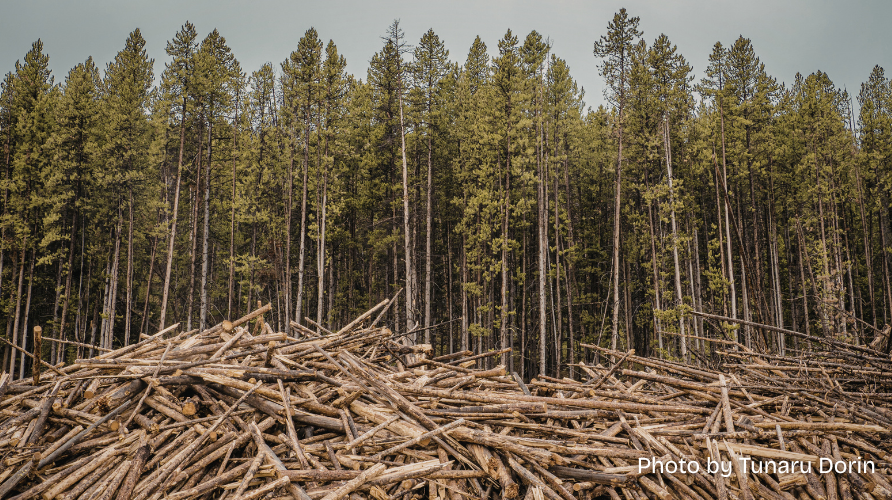
If you own wooded property in Virginia, you’ve likely invested years — sometimes decades — of natural resources into growing those trees. When we simply log everything and remove it from the site, we’re exporting the very nutrients and organic matter that built the forest in the first place.
The result? Depleted soil, increased erosion, and years of extra watering and amendments just to get things growing again.
There’s a better way.
The hidden cost of traditional logging
Trees are master nutrient accumulators. As they grow, their roots pull minerals and water deep from the subsoil. When you remove the entire tree (trunk, branches, and all), you’re essentially mining your own land. Over time, this practice can lead to compacted, nutrient-poor soil that struggles to support new growth.
But what if you could keep nearly all of that fertility on your property — and even turn it into a long-term advantage?
Enter hugelkultur: Nature’s slow-release Garden System
Hugelkultur (pronounced hoo-gul-culture) comes from the German words for “hill” and “culture.” At its core, it’s a brilliantly simple permaculture technique that mimics natural forest floor processes.
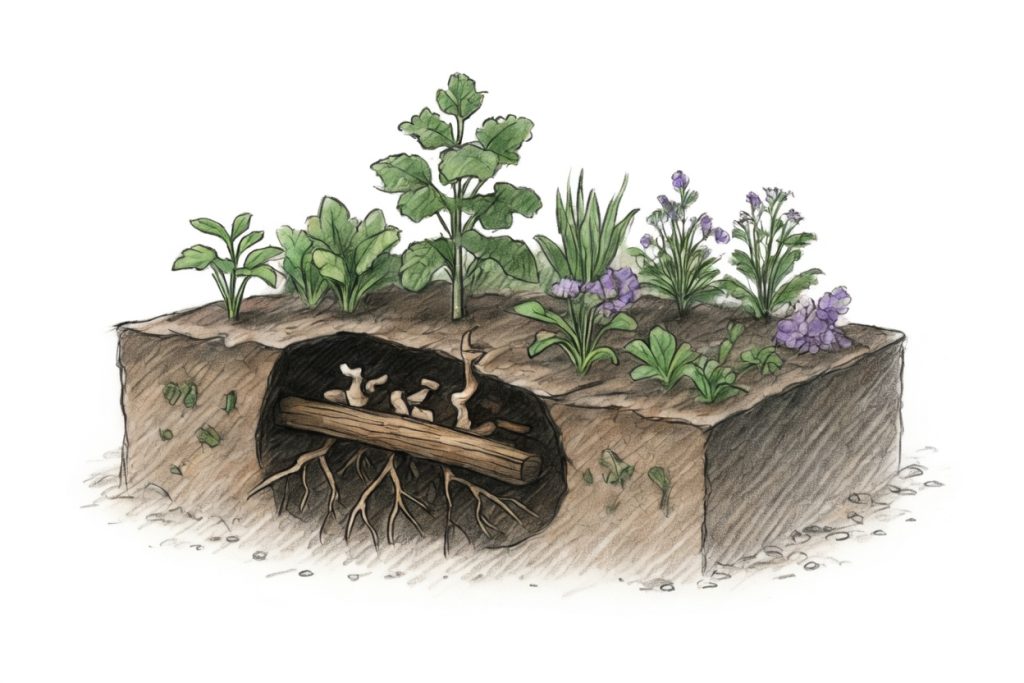
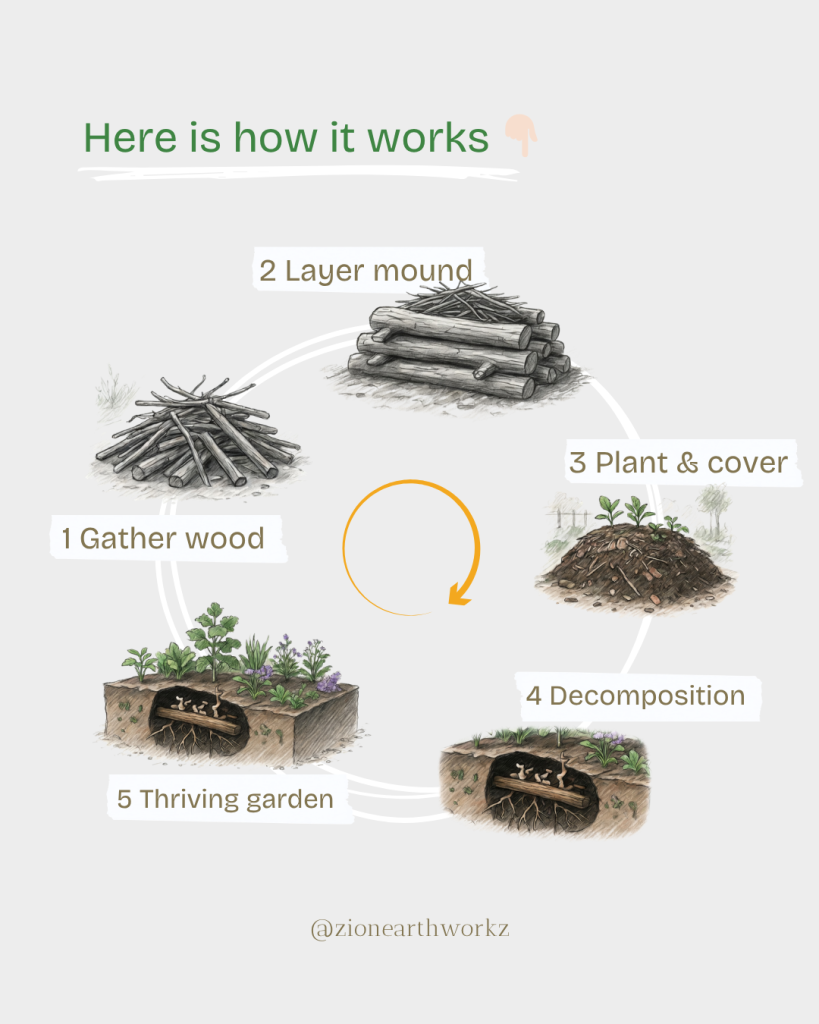
Instead of discarding woody material, you use it as the foundation for raised garden beds or planting mounds. Logs, branches, twigs, and other debris are layered at the base, then covered with organic matter, compost, and soil. Over time, the wood slowly decomposes, acting like a sponge and a nutrient factory for everything growing above it.
How to build a hugelkultur bed
- Choose Your Spot Pick a sunny location (or partial shade, depending on what you want to grow). Hugelkultur works especially well on sloped or poor-draining land.
- Dig a Trench (Optional but Helpful) Dig about 12–18 inches deep. This helps anchor the bed and gives you more volume for wood.
- Layer the Wood Start with the largest logs at the bottom, then add progressively smaller branches and twigs. The bigger the pieces, the longer the bed will last (some hugelkultur beds are still productive after 20+ years).
- Add Nitrogen-Rich Material Layer leaves, grass clippings, manure, or compost on top of the wood. This helps balance the high-carbon wood and speeds up decomposition.
- Top with Soil and Mulch Add 8–12 inches of good soil or compost. Plant directly into the mound. Finish with a thick layer of mulch.
Why hugelkultur works so well
As the wood breaks down, it delivers multiple powerful benefits:
- Outstanding drought resistance — The decomposing wood acts like a sponge, soaking up rainwater and slowly releasing it during dry periods. This is especially valuable in Virginia’s increasingly unpredictable climate.
- Improved soil fertility — Fungi, bacteria, and other soil life thrive on the decaying wood, creating rich, living soil full of nutrients.
- Better Drainage & Aeration — Even in heavy clay soils common in Virginia, hugelkultur beds rarely waterlog because of the open structure at the base.
- Extended Growing Season — The slow decomposition generates gentle heat, warming the soil earlier in spring and extending productivity into fall.
- Carbon Sequestration — Instead of releasing carbon through burning or rapid decay, you’re locking it into the soil for years.
- Cost-Effective & Sustainable — Once established, these beds require far less watering, fertilizing, and maintenance than traditional gardens.
Perfect for regenerative virginia landowners
Hugelkultur pairs beautifully with the regenerative forestry principles we’ve discussed before — like thoughtful thinning to give your best trees room to thrive. The “waste” from selective thinning and storm cleanup becomes the foundation for productive food gardens, pollinator beds, or herb spirals on your property.
You can start small with a single mound or go big and create an entire kitchen garden system using your own on-site materials.
Keep your gold
Your land has already done the hard work of growing those trees. The next time you’re cleaning up fallen timber or doing selective thinning, pause before you reach for the chipper or the burn pile. Those logs and branches might just be the most valuable “waste” you’ll ever have.
By working with nature instead of constantly exporting from it, you can build healthier soil, more resilient gardens, and a more productive, self-sustaining property for years to come.
Have you tried hugelkultur on your land yet? We’d love to hear about your results in the comments.
🦫 Zion Earth Workz is an earthwork company specializing in regenerative forestry, sustainable excavation and land improvement in Rappahannock county VA. 👋🏻
We offer services such as beaver forestry, water management (to prevent erosion, wildfires, flooding or drought), general excavation, and any work involving soil —perfect to prepare your property for development or to enhance the value of your land the sustainable way.
Ready to make your land thrive like a beaver’s paradise?
Give us a call today to chat about your land vision!
📲 Phone: (703) 662-9547
📥 Email: zionearthworkz@gmail.com
🌎 Website: zionearthworkz.com
📸 Instagram : @zionearthworkz