
📖 Reading time : 3 minutes
Imagine driving through a typical neighborhood today. You’ll likely pass row after row of bright green lawns, neatly edged and punctuated by tidy clusters of shrubs and flowers. The scene is quiet—no buzzing insects, no errant “weeds” breaking the uniform perfection. Just clean, orderly yards that signal care and control.
But are they truly well cared for?
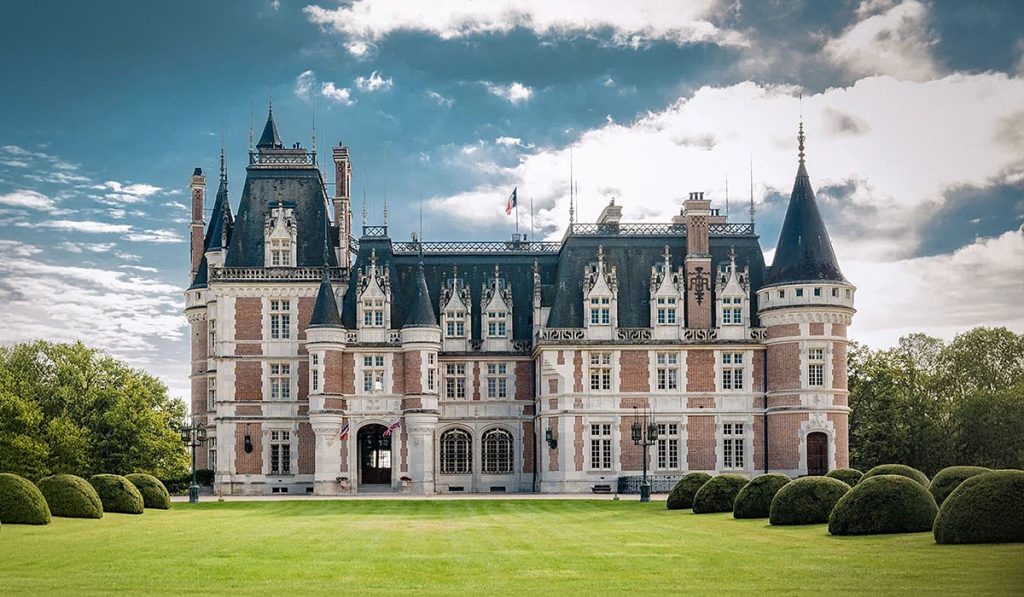
The modern obsession with the perfect lawn traces its roots to 17th-century Europe, where aristocratic estates surrounded their castles and manors with vast, manicured grasslands. Since these lawns could not be used for grazing livestock, they served as powerful symbols of wealth—visible proof that the owner could afford to maintain such unproductive land.
Centuries later, post-World War II, suburban developers in America embraced this ideal, turning the lush green lawn into an emblem of the American Dream. What began as a status symbol became a nationwide standard.
In the right climate and with healthy soil, these lawns can indeed be relatively straightforward to maintain. Yet contemporary landscaping has pushed the tradition to extremes. Heavy reliance on synthetic fertilizers, pesticides, and rigid maintenance practices now degrades soil health, pollutes waterways, erodes biodiversity, and severs our connection to nature’s true genius: the creation of resilient, thriving ecosystems.
Now, let’s explore the key differences between conventional and regenerative land management practices.
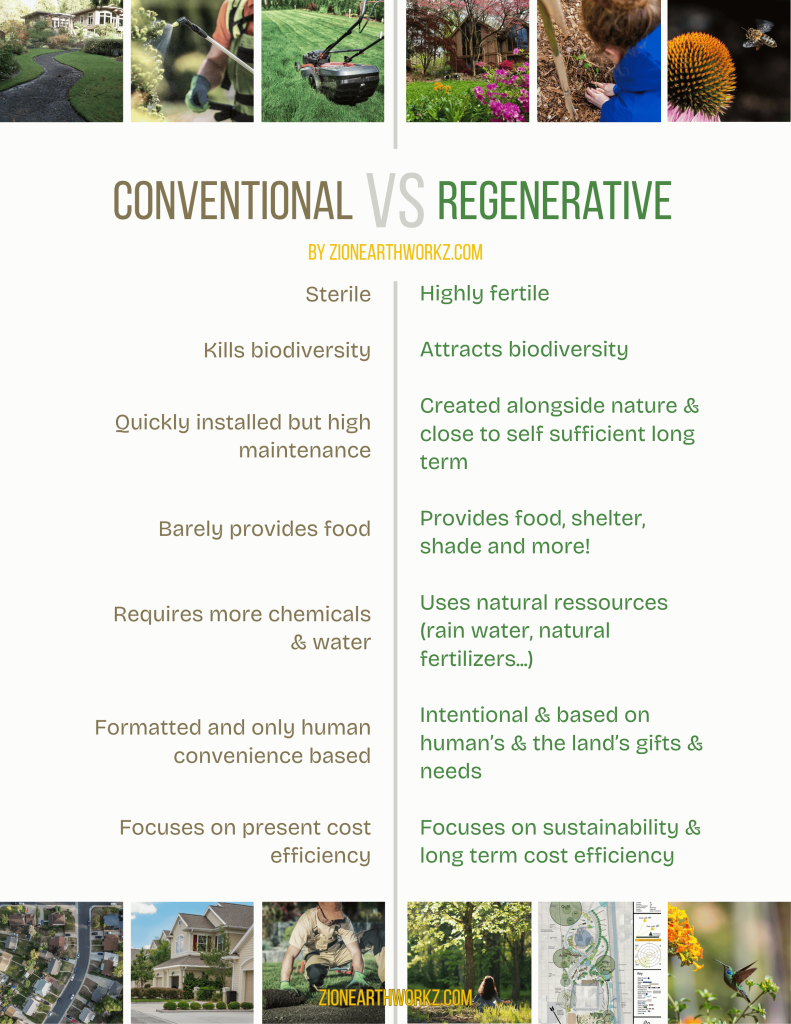
When you look at the full picture, continuing with conventional landscaping starts to feel like one of the worst long-term investments possible:
- It costs more money
- It demands more labor over time
- It is hostile to wildlife
- It wastes vast amounts of water
So why do we keep doing it?
The answer is simple: habit. Our brains are wired to prefer the familiar, even when it’s inefficient. We repeat the same methods we’ve always known rather than investing the time to learn better ones. Regenerative landscaping, by contrast, requires initial study of your land, patience, observation, and a willingness to shift old habits.
Yet the payoff is profound.
At its core, regenerative landscaping flips the sequence: dedication and careful observation come first; beautiful results and financial returns follow. Far from being an expense, it is one of the smartest investments you can make in your property.
At ZEW, we believe in creating landscapes that are sustainable, strikingly beautiful, and financially rewarding. When nature thrives — with richer soil, vibrant biodiversity, and healthier ecosystems — we all thrive.
🌎 Zion Earth Workz is an earthwork company specializing in regenerative forestry, sustainable excavation and land improvement in Rappahannock county VA. 👋🏻
We offer services such as beaver forestry, water management (to prevent erosion, wildfires, flooding or drought), general excavation, and any work involving soil —perfect to prepare your property for development or to enhance the value of your land the sustainable way.
Feel free to give us a call to talk about your project.
📲 Phone: (703) 662-9547
📥 Email: zionearthworkz@gmail.com
🌎 Website: zionearthworkz.com
📸 Instagram : @zionearthworkz